
Individual Therapy Intensives for Trauma & EMDR Work
Sometimes you want more room than a regular session can give you.
You get somewhere important, and suddenly it’s time to stop. Then life happens, a week passes, and the next session begins by finding the thread again.
More time doesn’t mean forced depth. It means we have more room.
An intensive isn’t “more therapy crammed into less time.”
It gives us more uninterrupted time.
We can stay with something longer, pause when we need to, take a break, move around, eat, rest, or change direction without the session ending just because the hour is up.
It may be worth considering when:
- There's something specific you keep coming back to and want more time to work with.
- You keep getting somewhere important in therapy just as the session has to end.
- You want to work on something in a more focused way instead of picking it up for an hour at a time over several weeks.
An intensive isn’t automatically the right choice because something feels urgent or painful.

How the work is structured
Depth needs preparation, and somewhere to land afterward.
- 01
Before
We clarify what is bringing you in, what you want to work with, what helps you stay connected to yourself, and whether an intensive is the right format.
- 02
During
Extended time without rushing. That may include conversation, experiential and body-based work, memory processing, parts work, breaks, movement, food, rest, or changing direction when clinically appropriate.
- 03
After
We make sense of what emerged and consider how it fits into your life beyond the intensive.
Built around the whole picture.
I don’t assume one diagnosis or one protocol explains everything that’s happening.
Sometimes trauma, dissociation, OCD, grief, religious experiences, attachment, perinatal concerns, or other pieces are interacting with each other. That matters because the work has to account for the overlap, not treat each part like it exists by itself.
We’ll decide what needs attention, what can wait, and what pace actually makes sense.
What the day actually looks like
Full-day intensives include six hours of therapy and a one-hour lunch break. 3-hour intensives include a shorter break.
For multi-day intensives, days may be scheduled consecutively or spaced out when spacing them out makes more sense. We’ll decide that together before dates are finalized.
You’ll know the schedule, breaks, and basic structure before you arrive.


What is a therapy intensive?
A therapy intensive gives us a longer, protected period of time to work on a focused concern without having to stop after a traditional therapy hour. That extra time can give us room to understand what is happening, prepare carefully, do focused therapeutic work, take breaks when needed, and make sense of what comes up before you return to everyday life.
More time does not mean pushing harder or going deeper than you are ready for. The pace still follows you and what is clinically appropriate.
How do I know how much time I need?
You don’t have to figure that out before you come in.
We start with a Clinical Assessment & Recommendations appointment so I can understand what has been happening, what you want help with, and what kind of treatment makes sense. If an intensive is appropriate, I’ll recommend the amount of time I believe gives us a responsible container for the work.
You can then decide whether you want to move forward.
The $375 Clinical Assessment & Recommendations is separate from the intensive fee.
If an intensive is recommended
Intensives can range from a focused three-hour session to several treatment days. The amount of time recommended depends on what we’re working on, not on choosing a bigger package.
3-Hour Intensive
3 hours of focused treatment
$1,500
Full-Day Intensive
6 hours of focused treatment
$2,250
2-Day Intensive
12 hours of focused treatment across 2 days
$3,750
3-Day Intensive
18 hours of focused treatment across 3 days
$5,250
5-Day Intensive
30 hours of focused treatment across 5 days
$8,250
What every intensive includes
There is more to an intensive than the hours we spend doing focused treatment.
- 90-minute Preparation Appointment
- Time to prepare for the work, establish what you need, and make sure we have a thoughtful plan before the intensive begins.
- Your Intensive Treatment Time
- The focused treatment time recommended for you. This may include different kinds of therapeutic work, pacing, breaks, and reassessment along the way. It does not mean continuous trauma processing for the entire scheduled time.
- 90-minute Integration Appointment
- Dedicated time afterward to make sense of what came up, notice what has changed, identify what may still need attention, and talk about what comes next.
Individualized treatment planning, resources, and preparation outside of session are also included. Additional assessment may be incorporated when clinically useful.
What the process looks like
- 1Assessment & Recommendations
- 2Preparation
- 3Intensive Treatment
- 4Integration
- 5What Comes Next
After an intensive, the next step is individualized. It may mean the episode of care is complete, returning to an established therapist, additional individual care if it is recommended and wanted, or another appropriate next step.
Also included
- Workbook and therapeutic resources to carry forward
- Preparation I complete outside our session time
- Planning shaped around what we're actually working with.
- Breaks and pacing built into the intensive
Private-Pay Care
Individual intensives are private-pay. I do not bill insurance and I do not provide superbills.
That gives us more freedom to determine the focus, format, and pacing based on the work itself rather than an insurance treatment model.
In-Person or Online
Individual intensives are available in person in San Antonio and New Braunfels, Texas, and virtually for clients located in Texas, Oregon, Washington, and Colorado. A limited number of in-home and destination intensives may also be available in those states. We’ll talk about the setting, privacy, and travel during consultation. If travel is involved, I’ll give you the full cost before you decide whether to book.

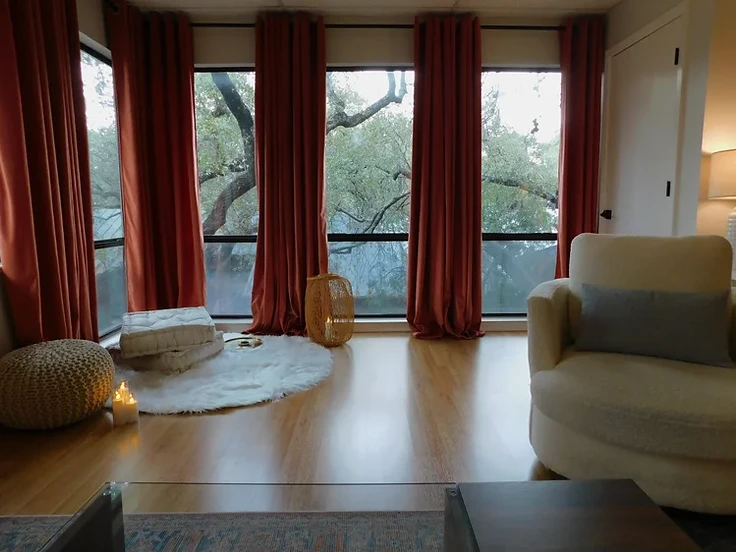
Payment, Cancellation & Rescheduling
- 50% due at booking for intensives scheduled 30+ days in advance; remaining 50% due 7 days before the intensive.
- Intensives booked fewer than 30 days in advance are paid in full at booking.
- Cancellation responsibility increases as the intensive date approaches.
- One reschedule is permitted with at least 14 days' notice, subject to the existing policy.
- Preparation and Integration appointments follow the practice's standard 48-hour cancellation/rescheduling policy.
Before You Book, You Might Wonder
What Happens After You Reach Out
- 01
New Client Consultation
30 minutes. We start with a conversation. Tell me what’s bringing you in, what you’re hoping might be different, and anything you’re wondering about working with me. I’ll answer your questions, explain how I work, and we’ll decide whether it makes sense to move into a full assessment. - 02
Clinical Assessment & Recommendations
90 minutes · $375. If we decide to keep going, this is where I take a much closer look at what’s happening. We’ll talk about what you’ve been dealing with, what you’ve already tried, what has helped, what hasn’t, and what I’m noticing. Then I’ll tell you what I recommend—even if it isn’t an intensive or isn’t with me. - 03
We decide what happens next
If I recommend working together and you want to, we’ll decide what that actually looks like. An intensive is one possibility, not the assumption. - 04
We get it scheduled
Once we know what we’re doing, we’ll choose dates, take care of payment, and make sure you know what to expect. - 05
Preparation
We meet for the 90-minute Preparation session before the intensive so we're not starting cold on the day itself. Preparation happens after an intensive has been recommended and selected, and it does not replace the assessment.
Already working with a therapist?
You don’t necessarily need to leave your current therapist to do an intensive with me.
An intensive can sometimes be one focused part of a larger treatment plan, with your existing therapist continuing to provide ongoing care. During assessment, we’ll talk about what you’re already working on, what you’re hoping to address here, and whether the two pieces of care fit together.
When coordination is needed, I’ll ask for your authorization to communicate with your therapist so we’re clear about roles, treatment focus, sequencing, and what happens after the intensive.
Sometimes the work fits well together. Sometimes it makes more sense to complete one piece before beginning another.
That’s part of what the assessment is for.


Not sure an intensive is actually the right fit?
If I don't think an intensive makes sense for what you're bringing in, I'll tell you.
Also considering other formats? Explore Couples Intensives.